
For global umbrella buyers, a competitive price is important, but it is not enough. When you source custom umbrellas, promotional umbrellas, golf umbrellas or folding umbrellas from overseas suppliers, you also need to understand whether the factory can meet social compliance expectations, keep production stable and provide documents that your retail or brand customers may request. This is why a BSCI factory audit is often part of the supplier evaluation process.
BSCI, now under amfori, focuses on improving social performance in global supply chains. For umbrella importers, distributors and brand owners, it can be used as one reference point when comparing potential umbrella manufacturers. However, buyers should not only ask whether a supplier has a certificate. The more practical question is: what should you check behind the audit report before placing a bulk umbrella order?
Why BSCI Matters When Choosing an Umbrella Supplier
Umbrella production involves fabric cutting, printing, sewing, frame assembly, inspection, packaging and shipment coordination. A reliable factory needs not only technical capability, but also organized management. For B2B buyers, a BSCI audit can help indicate whether the supplier has a basic system for labor management, workplace safety, working time, fair remuneration and responsible business practices.
This is especially useful when your customer is a supermarket, department store, promotional gift company, outdoor brand or corporate procurement team. These customers may ask for compliance documents before confirming a seasonal order or annual supply program. A factory with audit experience can usually respond faster and prepare supporting files more clearly.
1. Confirm the Audit Scope and Factory Name
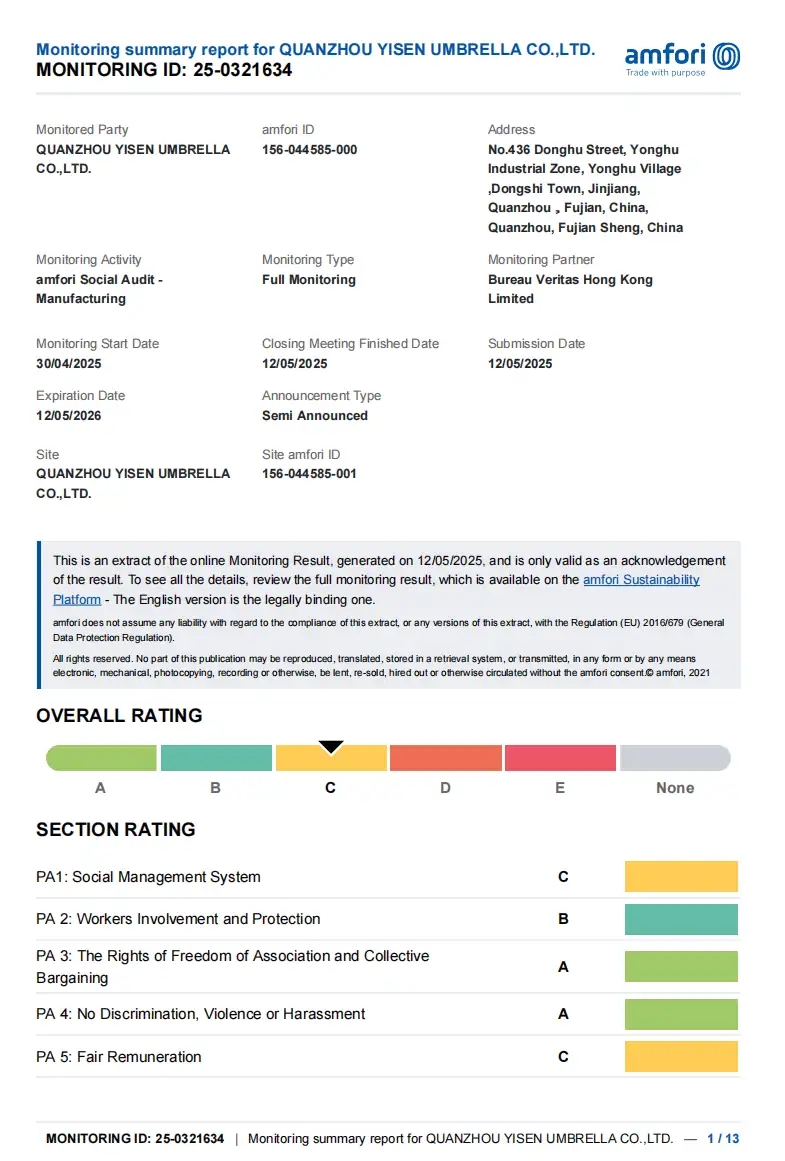
The first step is to confirm whether the audit belongs to the actual production site, not only a trading office or unrelated company. Check the factory name, address, monitoring ID, audit date and validity period. For umbrella buyers, this is important because some suppliers may outsource production to another workshop. If the audited site is not the same place where your umbrellas will be produced, the document has limited value for your order risk control.
When reviewing an umbrella supplier, ask simple but direct questions: Where will fabric printing be done? Where will sewing and frame assembly happen? Who controls final inspection and packing? A good supplier should be able to explain the production flow clearly and match it with the factory information shown in the compliance documents.

2. Review the Overall Rating, But Do Not Stop There
Many buyers first look at the overall audit rating. This is useful, but it should not be your only decision point. A factory may have a middle-level rating but still be suitable for certain B2B programs if it has stable production, transparent communication and corrective action plans. On the other hand, a good-looking document should still be checked together with real production capacity and product quality.
For umbrella sourcing, you should combine compliance review with product-specific checks, including canopy fabric quality, frame strength, opening and closing performance, printing accuracy, waterproof performance and carton packing. The most practical supplier evaluation is a combination of compliance, production control and product testing.
3. Check Social Management and Internal Responsibility
A factory audit often reviews whether the company has a social management system. In practical sourcing terms, this means the factory should have assigned staff for compliance, HR records, worker communication and internal procedures. For umbrella buyers, this is important because seasonal orders can be time-sensitive. If the factory lacks management structure, delays or communication gaps may appear during peak production months.
Before placing a large order, ask who will handle your production schedule, quality updates and document requests. A supplier with organized internal responsibility can usually provide clearer production plans, inspection photos and shipment coordination.
4. Evaluate Quality Control Together With Compliance
BSCI is not a product quality certificate. It does not directly prove that an umbrella is windproof, waterproof or suitable for your target market. Therefore, B2B buyers should also check the factory quality control process. For umbrella manufacturing, useful checkpoints include incoming material inspection, frame inspection, sewing inspection, printing approval, semi-finished product review, final random inspection and carton drop or packing checks when required.
For example, if you are ordering custom golf umbrellas, you may need to pay attention to canopy size, fiberglass rib structure, wind resistance and handle comfort. If you are ordering folding umbrellas, compact size, opening mechanism, shaft stability and fabric tension may be more important. Compliance supports supplier trust, while QC confirms whether the final product can meet your customer requirements.
5. Ask for Corrective Action and Continuous Improvement
A realistic audit report may include points that need improvement. This does not always mean the supplier should be rejected. What matters is whether the factory understands the findings and has a corrective action plan. For long-term buyers, continuous improvement can be more valuable than a one-time document.
When discussing BSCI with an umbrella supplier, ask whether there are recent updates, renewal plans or improvement measures. A cooperative supplier should be willing to explain the status honestly and provide supporting information when needed.
6. Match Compliance With Your Market Requirements
Different markets may have different expectations. European buyers may pay more attention to social compliance, chemical restrictions, packaging labels and sustainability claims. North American buyers may focus on safety, quality consistency and shipment reliability. Promotional product buyers may need fast documentation for corporate customers. Therefore, BSCI should be reviewed together with your customer’s real purchasing requirements.
If your project involves recycled fabrics, RPET umbrellas or eco-friendly umbrella collections, you may also need to check GRS-related documents or material declarations. If your project involves children’s umbrellas, market-specific safety and labeling requirements may also be necessary.
7. Build a Supplier Checklist Before Bulk Orders
Before confirming a bulk umbrella order, buyers can use a simple checklist:
- Factory name and address match the audit document.
- The audit is still valid or recently updated.
- The supplier can explain production flow and quality control steps.
- Sample quality matches your confirmed specification.
- Logo printing, fabric color and packing details are approved before mass production.
- The supplier can provide inspection photos or arrange third-party inspection if required.
- Communication is clear about lead time, MOQ, carton size and shipment plan.
How Ark Umbrella Supports B2B Buyers
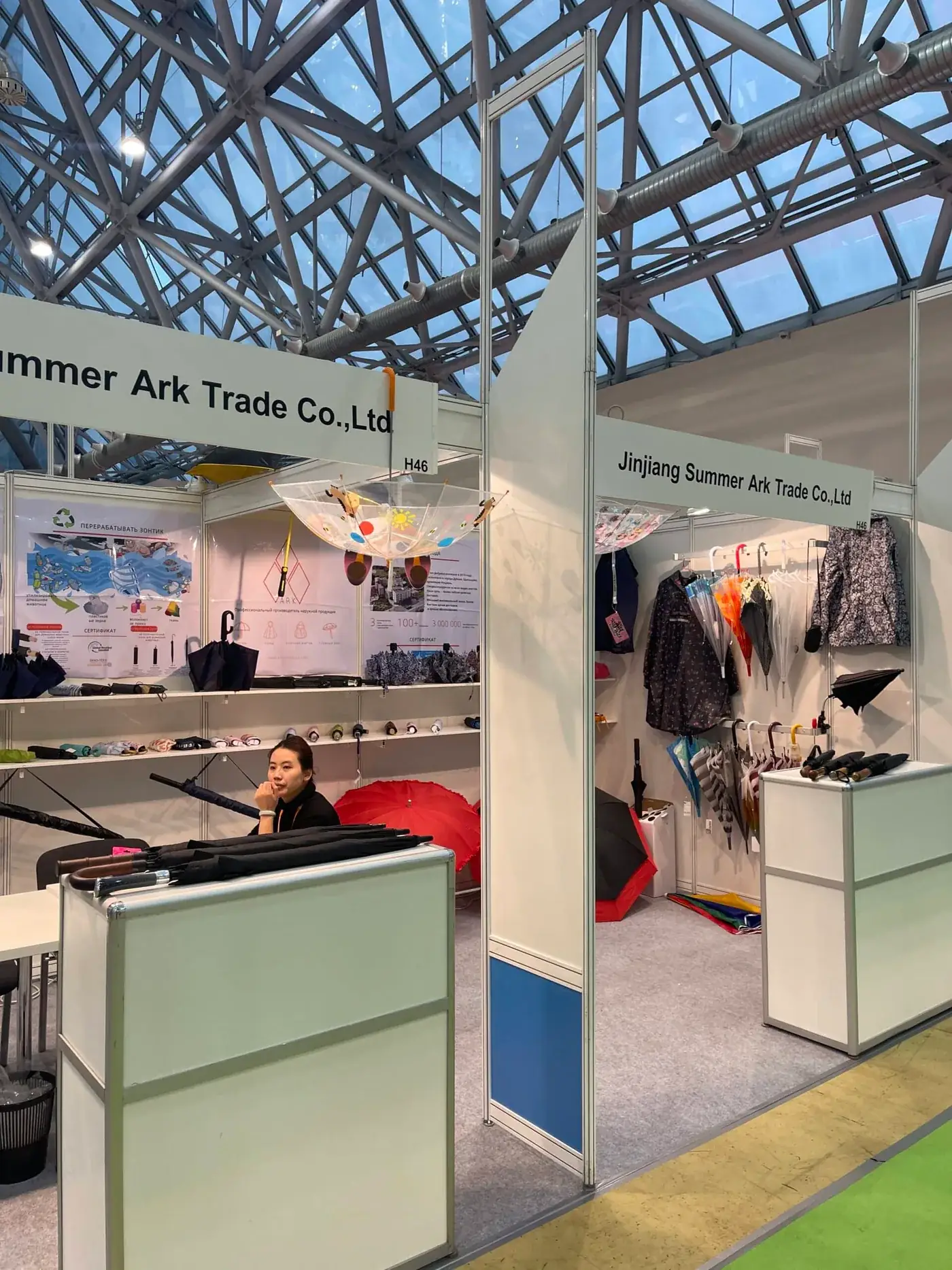
Ark Umbrella works with global B2B buyers who need custom umbrella manufacturing, wholesale supply and OEM logo printing support. For buyers who care about compliance and factory transparency, we can provide available factory documents, production photos, product details and quality control information according to project requirements.
We also help buyers choose suitable umbrella types based on order scenario, including promotional umbrellas, golf umbrellas, folding umbrellas, transparent POE umbrellas and eco-friendly umbrella options. If your team needs to evaluate a new umbrella project, you can contact Ark Umbrella with your target market, quantity, logo design and compliance requirements.
Sources and buyer references
The links below are included to help buyers verify the external standards, inspection context or trend references behind this sourcing guidance. They do not replace a project-specific quotation, sample approval or written factory confirmation.
- Intertek amfori BSCI audits and supplier compliance services – Use this to verify that amfori BSCI is a social-compliance audit framework, not a product quality certificate.
- Intertek inspection services – Use this to explain why buyers still need product and shipment inspection evidence in addition to social-compliance checks.
FAQ: BSCI Factory Audit for Umbrella Buyers
Is BSCI a product quality certificate?
No. BSCI focuses on social compliance and responsible business practices. Umbrella product quality should still be checked through samples, specifications, production inspection and final QC.
Should I reject a supplier if the BSCI rating is not perfect?
Not always. Buyers should review the overall context, corrective action plan, production capability and communication quality. A practical supplier evaluation should combine compliance and order performance.
What documents should I ask an umbrella factory to provide?
You can ask for available audit documents, business information, product specifications, sample photos, QC process details and packing information. For special markets, additional certificates or test reports may be required.
Can BSCI help with retail customer approval?
It can help as part of the supplier review process, especially for customers who require social compliance documents. However, each retailer or brand may have its own approval rules.
Need a compliant umbrella supplier for your next project? Send your product type, order quantity, target market and logo requirements to Ark Umbrella, and our team will help you review the best manufacturing solution.
Related sourcing resource: For buyers auditing supplier reliability, Ark Umbrella’s China umbrella factory and manufacturer guide explains production capability, OEM/ODM workflow, MOQ planning and export support alongside quality-control expectations. For active sourcing projects, send a sourcing brief or contact Ark Umbrella for a factory review.