
Resposta direta: To purchase custom umbrellas for Switzerland without multiplying costs and complexity, a buyer can build a short range with clear roles: an everyday folding umbrella, a more formal straight model and a few brand-linked colors. The specification, physical sample, color reference, packaging and inspection criteria must remain documented so the first order and reorders can be compared against the same reference.
The guide is designed for Ticino companies, agencies, promotional distributors, boutiques, hotels and event organizers. Product and material images come from Ark Umbrella’s company archive. No fixed MOQ, price or lead time is stated: these depend on the model, fabric, color, print, accessories, packaging, quantity and production plan.
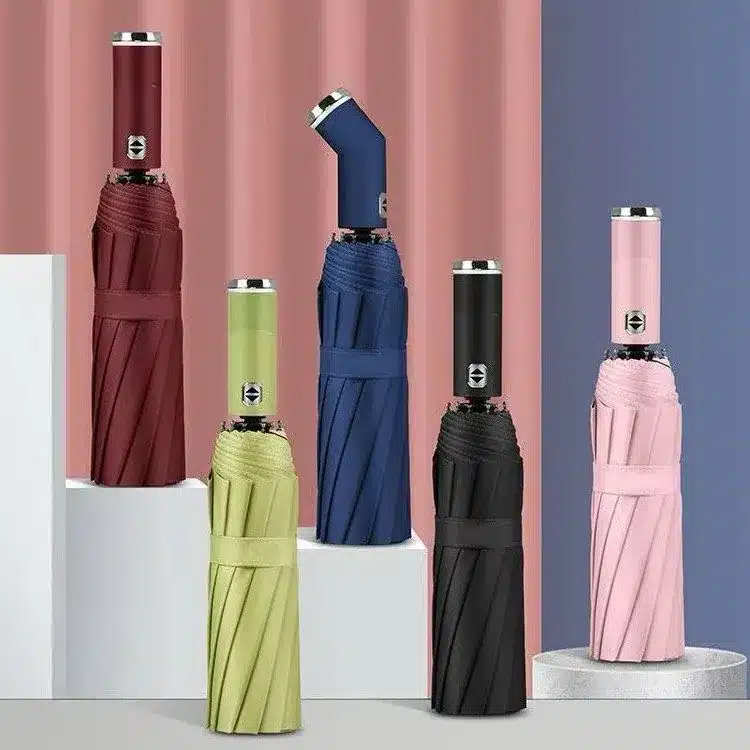
1. Assign a role to each model
A folding umbrella is suitable for kits, travel, events and mailings because it takes up little space. A straight model communicates a more classic presence and offers a larger branding area. A golf umbrella can serve outdoor programs or selected customers, but requires more storage and transport volume.
Describe the recipient, occasion, frequency of use, delivery method and price position. If two models perform the same function, one can probably be eliminated. A streamlined range makes selection easier and reduces samples, inventory and the risk of error.
2. Design a palette that is easy to reorder
Start with one or two brand-friendly core colors and add a seasonal variant only when it has a commercial purpose. Define the color reference, the material on which it must be reproduced and the acceptable tolerance. The same code may appear different on fabric, plastic, wood or metal.
For an ongoing program, keep approved sample, controlled light photographs, graphic file and technical data sheet. When reordering the supplier needs to know if the color is an exact repeat, a visual match or a new dye to be approved.
3. Write a complete specification
The brief includes umbrella type, open diameter, closed length, opening system, canopy fabric, coating, frame, shaft, handle, color, logo, cover, packaging, quantity, destination and required date. The Página do fabricante da Ark Umbrella is the starting point for OEM, wholesale and logo projects.
Ask each supplier to highlight any alternatives. Two “automatic folding umbrellas” may use different materials, sizes, weights and components. A price becomes comparable only when it refers to the same configuration.
4. Evaluate fabric as a technical and visual material
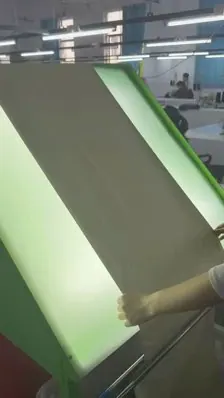
Do not buy on the name “polyester” or “pongee” alone. Ask for the description, weight or agreed specification, finish, water repellency, color and compatibility with the printing method. A fabric swatch helps, but the complete product reveals canopy tension, stitching and frame behavior.
If RPET or another material with recycled content is proposed, the commercial claim must correspond to the documentation available for that fabric. The buyer must check the document or certificate holder, scope, validity and connection to the specific order.
5. Prepare logo and print preview
Send vector file, color references, size, panel, orientation and free margin. Determine whether the mark also appears on the case, strap, label or packaging. Complex graphics or a dark background may require a different method and test.
A digital preview checks layout and text; it does not demonstrate ink coverage, adhesion, sharpness or deformation on the open product. For branded umbrellas, approve a physical sample and record the version, date and final comments.
6. Check the sample opened and closed
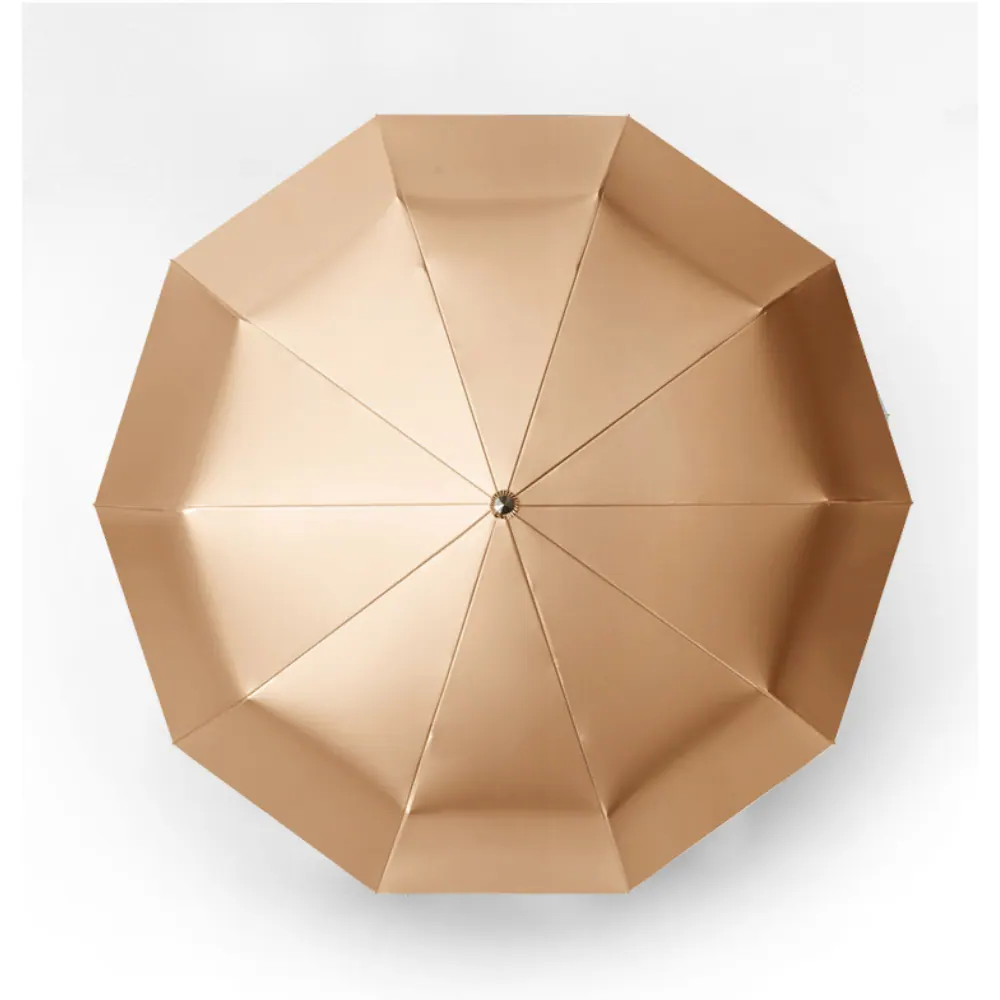
With the umbrella open, check the shape, tension, panel uniformity, stitching, printing and stability. When closed, check the dimensions, folding sequence, strap and cover fit. Test multiple opening and closing cycles, the lock and the button if present.
Consolidate marketing, purchasing and quality comments into one document. Each modification must state whether the price, material or schedule also changes. The approved sample becomes the visual reference, but the production run still requires measurable criteria.
7. Define quality control
Indicate measurements, tolerances, appearance, logo position, stitching, operation, grip attachment, tips, case, labels and cartons. Classify defects by impact and choose a sample size consistent with volume and risk.
Use the quality checklist for B2B buyers as a shared base. Intermediate checks should take place before an error becomes widespread: approve color before full cutting, the logo before assembly and the packaging before full pack-out.
8. Simplify packaging and management
A matching case may be sufficient for indoor use. For gifts or retail, a band, card, barcode or box may be needed. Specify materials, languages, texts, quantities per carton and logistics markings. Packaging must protect and present without creating unnecessary volume.
Ask for the measurements and weight of the proposed carton. Foldables make shipping and storage easier, but a premium box can negate some of the benefit. Check that the format works with your warehouse, courier and Swiss distribution point.
9. Prepare reorders from the first batch
Create a master file with model number, components, color, logo, location, case, packaging, approved sample and inspection notes. Also note any prohibited substitutions. This document reduces the risk of a reorder being produced according to incomplete memory or photographs.
Before confirming a new production run, ask the manufacturer to report any materials or components that are no longer available. If a replacement is needed, approve a new sample of the affected part and update the master file instead of accepting an informal change.
10. Compare MOQ, cost and schedule
The minimum quantity derives from the combination of model, color, fabric, print, special pieces and packaging. Ask the threshold for the exact configuration and possible alternatives that maintain the goal. Evaluate sample, printing, accessories, packaging, inspection and delivery basis separately.
Plan the brief, quote, mockup, sample, transport, approval, materials, production, inspection, corrections, packing and shipping. Set an internal date after which any artwork change requires a transparent review of the schedule and cost.
Checklist for a compact assortment
- Role, recipient and channel of each model.
- Type, size, mechanism, fabric, frame and handle.
- Core palette, color references and reordering rules.
- Logo, location, case, label and packaging.
- Quantity, destination, date and potential continuity.
- Sample, tolerances, inspection and final master file.
Perguntas frequentes
How many models do you need to get started?
Often two or three models with distinct roles are sufficient. Add a variant only when it serves a different audience, channel, or price level.
How to maintain color in reorders?
Keep reference color, fabric, approved sample, checked photos and tolerance. Ask for new approval when the batch of material or dye changes.
Is digital preview enough for printing?
It is useful for layout. The physical sample confirms color, coverage, proportion and result on the open umbrella.
Where to find more resources?
Explore o arquivo do guia de compras da Ark Umbrella e o procurement FAQ for samples, suppliers and delivery planning.
Próximo passo
For a Swiss promotional or custom folding-umbrella project, send Ark Umbrella the model roles, quantities, color palette, logo, materials, packaging, quality criteria and target date. The team can then confirm a project-specific sample route, MOQ, reorder plan and quotation.