
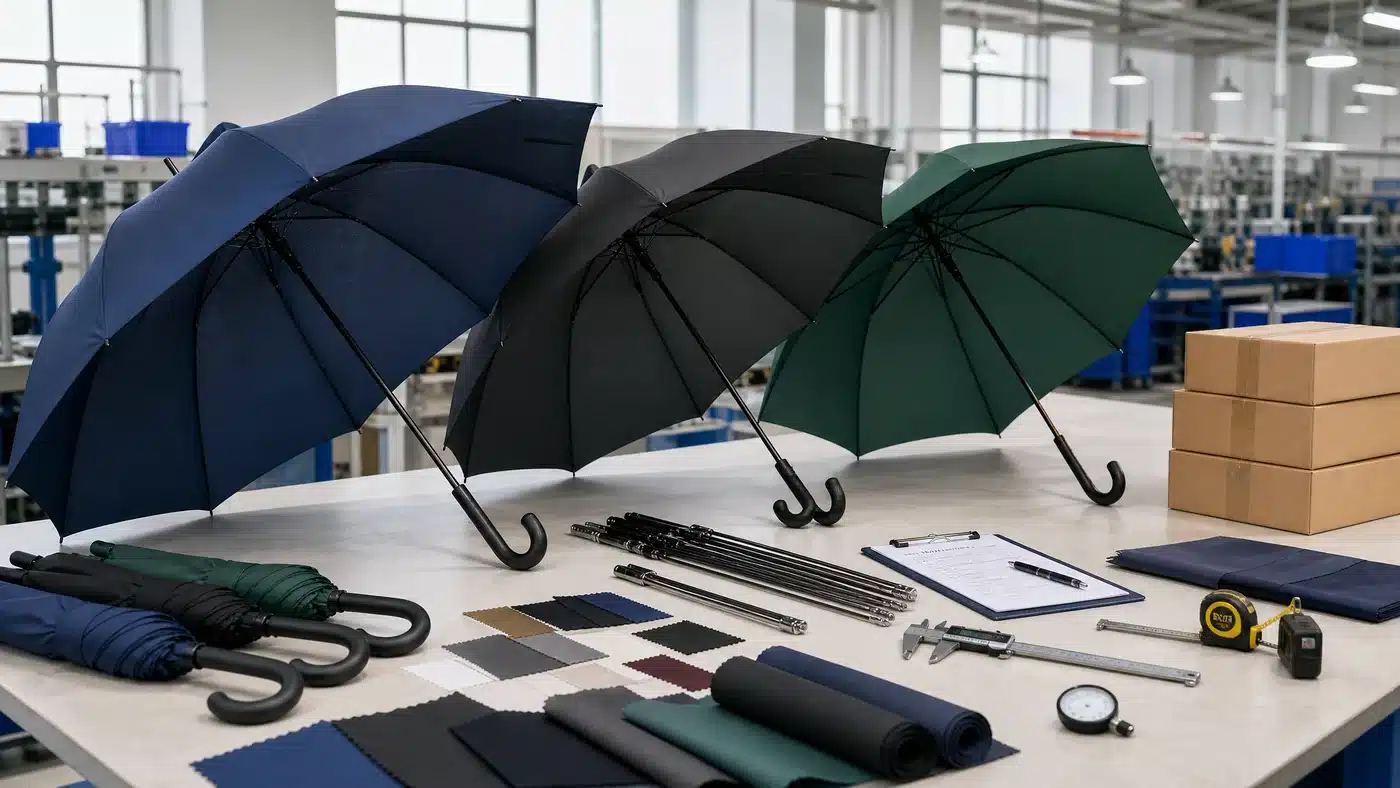
Factory Capabilities
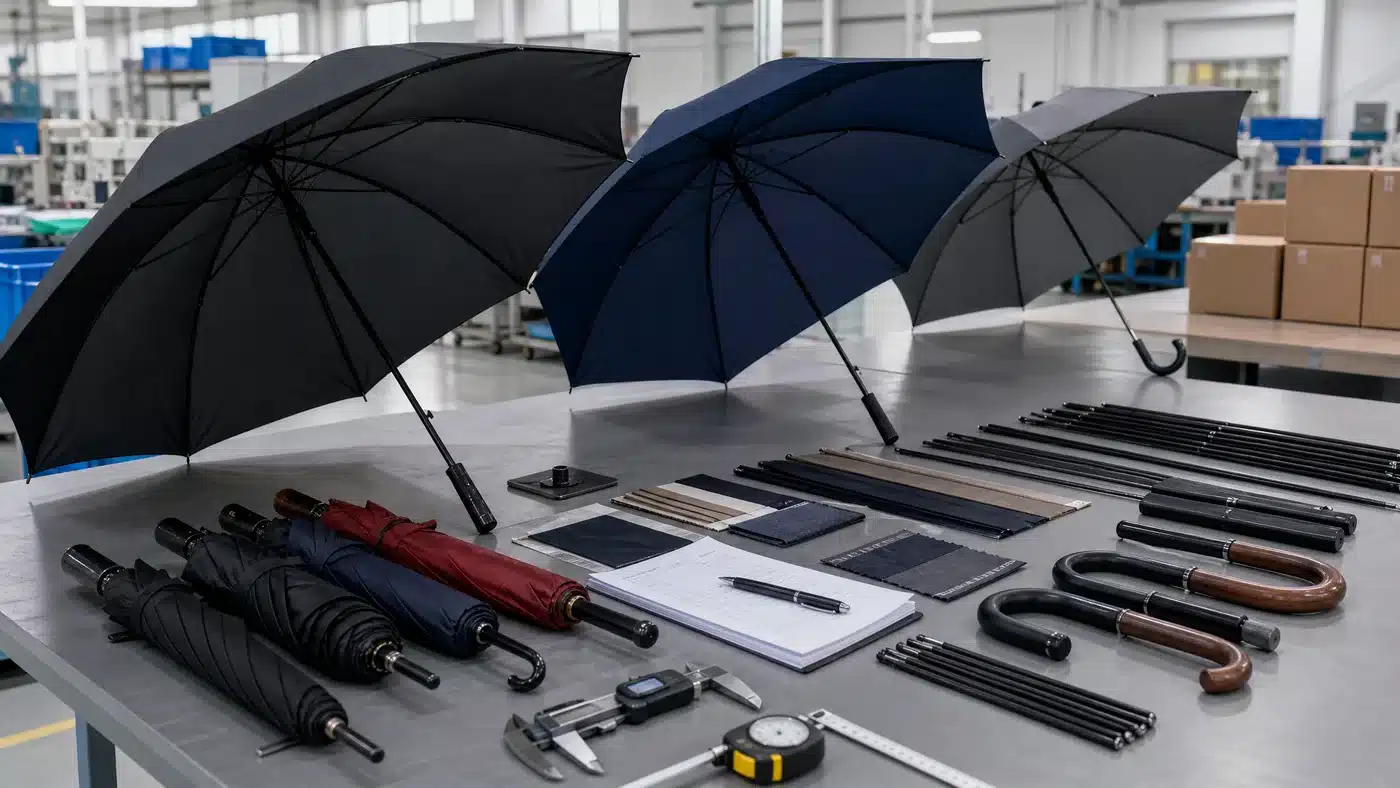
- OEM and ODM umbrella manufacturing: folding umbrellas, automatic umbrellas, straight umbrellas, golf umbrellas, kids umbrellas, transparent umbrellas and custom printed umbrellas.
- Colour matching: trend colours should be converted into physical fabric samples, lab dips or approved colour standards before mass production.
- Logo and artwork support: buyers can request panel logo printing, sleeve branding, all-over canopy print, hang tags and packaging artwork.
- Material options: standard polyester, pongee, RPET fabric, UV coating, black coating, reflective trim, wood handle, bamboo handle or custom handle options.
- Quality control: canopy cutting, stitching, water repellency, frame strength, open-close function, print clarity, handle assembly and carton packing checks.
- Export readiness: carton marks, packing list, sample approval records and buyer-specific packaging requirements.
Factory Brief Template for B2B Buyers
| Product type | Folding, automatic, straight, golf, transparent, kids or special custom umbrella. |
| Market | Target country, sales channel, buyer type and expected retail or promotional use. |
| Colour | Physical colour standard, approximate trend direction, lab dip request and tolerance expectations. |
| Artwork | Vector logo, panel artwork, sleeve design, hang tag, packaging and placement instructions. |
| Material | Canopy fabric, coating, frame, ribs, shaft, handle, tips, strap and sleeve. |
| Order detail | Quantity, target price range, sample deadline, shipping date and packing method. |
| QC requirement | Inspection checklist, testing requirement, carton mark and approval process. |
How Buyers Can Use Factory Information to Shortlist Suppliers
Factory information becomes useful when it helps a buyer make a supplier decision. For Ark Umbrella, the strongest supplier-shortlist signals are product range, custom sample workflow, logo and material coordination, QC process, export packing and clear communication before mass production.
A practical shortlist should also separate general sales claims from observable evidence. Buyers can ask whether the factory has made similar umbrella types, how it confirms custom color, whether logo artwork is checked before printing, and what inspection steps happen before cartons leave the factory.
| Shortlist factor | What to check | Why it matters |
|---|---|---|
| Product range | Folding, straight, golf, transparent, UV and special umbrella options. | Shows whether one factory can support multiple buyer programs. |
| Sample workflow | Blank sample, printed sample, pre-production sample and approval record. | Reduces risk before bulk order production. |
| QC visibility | Frame, stitching, logo, coating, open-close and packing checks. | Creates evidence buyers can use for inspection planning. |
| Export support | Carton marks, packing list, shipping window and documentation coordination. | Helps importers avoid avoidable shipment delays. |
Before paying sample cost or confirming a bulk order, buyers should ask for the intended sample type, approximate sample lead time, artwork confirmation process, bulk production estimate and inspection responsibility. These answers turn a factory introduction page into a sourcing decision tool.
To connect this factory page with deeper buyer guidance, review the inside umbrella factory production article, umbrella QC checklist, umbrella parts guide and Ark Umbrella contact page.
Factory Capability Evidence Pack
A factory capability page should give buyers a practical evidence pack they can request before a custom umbrella order. The pack should include product references, material options, sample workflow, logo and artwork process, QC checklist, packing method and export communication notes.
For major-economy buyers, this evidence matters because each market may ask for different colors, design details, packaging formats or compliance language. The factory still needs to turn those market ideas into manufacturable umbrellas. A clear evidence pack shows how Ark Umbrella connects design direction with actual sample and production steps.
Buyers can turn the evidence pack into a pre-sampling checklist. Before paying for a sample, confirm which model is being sampled, which color or fabric is available, how logo artwork will be placed, what packaging will be shown and which details may still change before bulk production. This makes the factory page more actionable for importers, retailers and promotional product buyers. It also gives teams a clear record for supplier comparison.
Share the evidence pack before finalizing the export assortment so the factory can flag material availability, colour limitations, sampling risks, packing constraints and inspection needs. Compare suppliers against the same checklist and retain decision notes for future seasonal orders and reorders.
| Evidence area | What buyers can request | Decision supported |
|---|---|---|
| Product capability | Photos of similar folding, straight, golf or transparent umbrellas. | Whether the factory understands the target style. |
| Sample process | Blank sample, printed sample or pre-production sample plan. | How the buyer approves before bulk order. |
| Customization | Color, fabric, logo, handle, sleeve and packaging options. | How market trends become production specs. |
| QC and packing | Inspection checklist, carton marks and packing references. | How the shipment will be checked and controlled. |
Buyers can connect this factory evidence with the inside umbrella factory article, factory information guide, QC checklist and contact page when preparing a supplier shortlist.
Importer Checklist for Choosing an Umbrella Factory
Before selecting an umbrella factory, importers should confirm whether the supplier can support the complete buying workflow, not only a catalogue quotation. A practical factory comparison should include umbrella type coverage, fabric and frame options, logo printing methods, sample lead time, production capacity, inspection steps and export packing standards.
For B2B buyers, the strongest supplier is usually the one that can turn a market brief into a controlled production plan. That means helping the buyer match canopy size, shaft material, runner system, handle style, coating, colour palette and packaging to the target sales channel. It also means documenting the approved sample so bulk production can be checked against a clear reference.
| Factory area | What importers should verify |
|---|---|
| Product range | Folding, straight, golf, kids, sunproof and promotional umbrella options. |
| Customization | OEM/ODM structure, Pantone colour matching, logo printing and packaging support. |
| Quality control | Sample approval, inline checks, final inspection and export packing review. |
| Export support | MOQ planning, lead time control, carton marks, documentation and shipment coordination. |
Related sourcing resource: For supplier screening, see Ark Umbrella’s China umbrella factory and manufacturer guide for factory capabilities, OEM/ODM options, MOQ planning and export support. For active projects, send a sourcing brief or contact Ark Umbrella for a project review.
Sources and buyer references
The links below help buyers verify the external standards, inspection context or trend references behind this sourcing guidance. They do not replace a project-specific quotation, sample approval or written factory confirmation.
- Intertek amfori BSCI audits and supplier compliance services – Use this to separate social-compliance audit context from product quality and factory-capability claims.
- ISO 2859-1:2026 sampling procedures – Use this to support inspection-plan language when buyers evaluate factory QC evidence.