
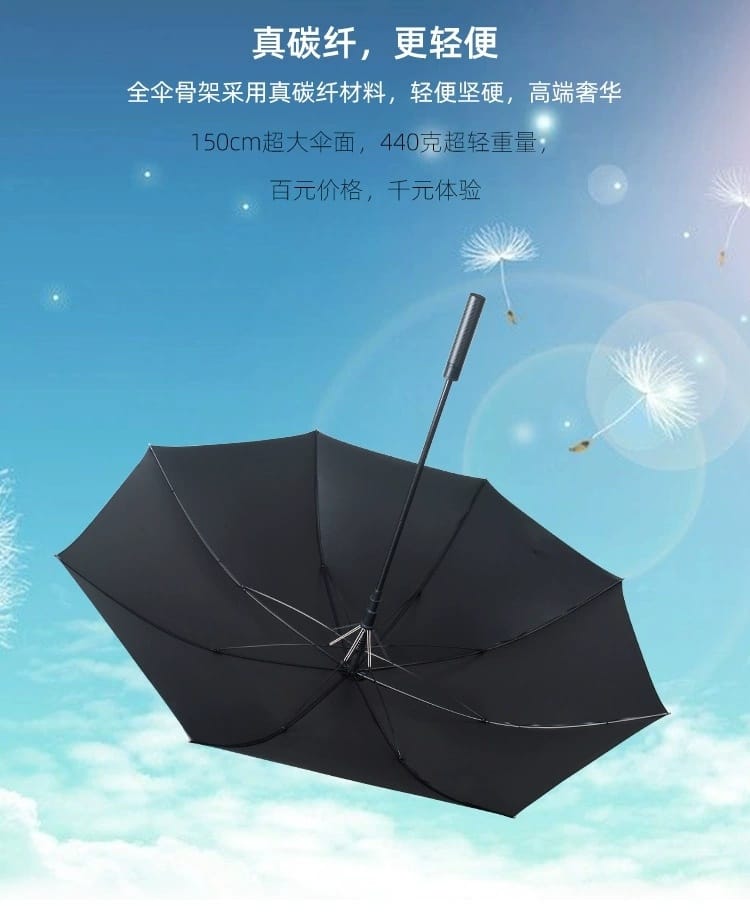
When comparing carbon fiber umbrellas, buyers should review the proposed components, supplier documents and finished samples. This guide distinguishes the supplied tube and rod material certificates from the component test sheets and explains which details still need model-specific confirmation.
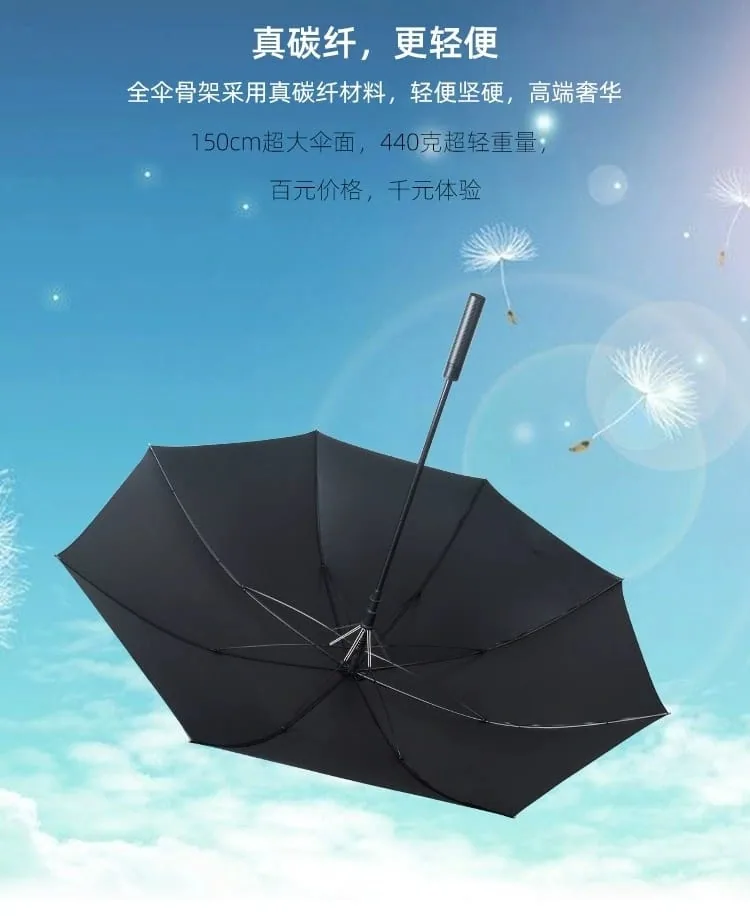
What evidence supports this carbon fiber umbrella page?
The available documents include separate supplier material certificates for a tube and a rod, plus component test sheets. Product photos show the umbrella layout; they do not establish test results or link tested specimens to a particular finished umbrella model.
| Source | What it covers | Key values quoted on this page |
|---|---|---|
| Material certificate, tube page | Carbon fiber tube certificate, dated 2025-03-18, specification 14 x 12 mm | T300 carbon fiber yarn 70% +/-5%, epoxy resin 25% +/-5%, flexural 61 MPa, impact 61 kJ/m2, tensile 730 MPa, density 1.5 g/cm3. |
| Material certificate, rod page | Carbon fiber rod certificate, dated 2025-03-18, specification 2.8 mm | T700 carbon fiber yarn 70% +/-5%, epoxy resin 25% +/-5%, tensile 949 MPa, density 1.5 g/cm3. |
| Carbon-fiber rod test sheets | Component tests dated 2025-04-25 | At a test speed of 50 mm/min and a 100 mm gauge distance, three separate groups report average maximum forces of 12.021 kgf (8 samples), 9.737 kgf (3 samples) and 9.329 kgf (2 samples). These values describe the tested components, not the finished umbrella. |
The test sheets include handwritten specimen dimensions that differ between groups. Confirm those dimensions and the relevant component with the supplier; do not combine the groups into one result or assume that they represent this finished umbrella model.
What the carbon fiber material certificates actually say
The first material certificate covers a carbon fiber tube with specification 14 x 12 mm. It lists T300 carbon fiber yarn at 70% +/-5%, epoxy resin at 25% +/-5% and other material at 5% +/-1%. The same page reports flexural performance at 61 MPa, impact performance at 61 kJ/m2, tensile performance at 730 MPa and density at 1.5 g/cm3.
The second certificate covers a carbon fiber rod with specification 2.8 mm. It lists T700 carbon fiber yarn at 70% +/-5%, epoxy resin at 25% +/-5%, calcium carbonate at 3% +/-1% and release agent at 2% +/-1%, with density again shown as 1.5 g/cm3. The reported tensile value on this page is 949 MPa, which is higher than the 730 MPa noted on the tube certificate.
For buyers, the important point is not to treat these two pages as interchangeable. They refer to different component forms: a tube and a rod. In a finished umbrella, those parts can serve different structural roles, so the safest reading is that the supplied project uses carbon fiber components with documented composition and density, rather than relying on an unverified “carbon-look” claim.
How to read the component test sheets
The three supplied test sheets are dated 25 April 2025. They use a 50 mm/min test speed and a 100 mm gauge distance. Check the specimen labels, dimensions and handwritten notes with the supplier before applying these results to an order.
These results apply to the specimens described in each sheet. Before relying on them for sourcing, confirm the relevant component, dimensions and production batch, and request any finished-umbrella tests needed for the intended use.
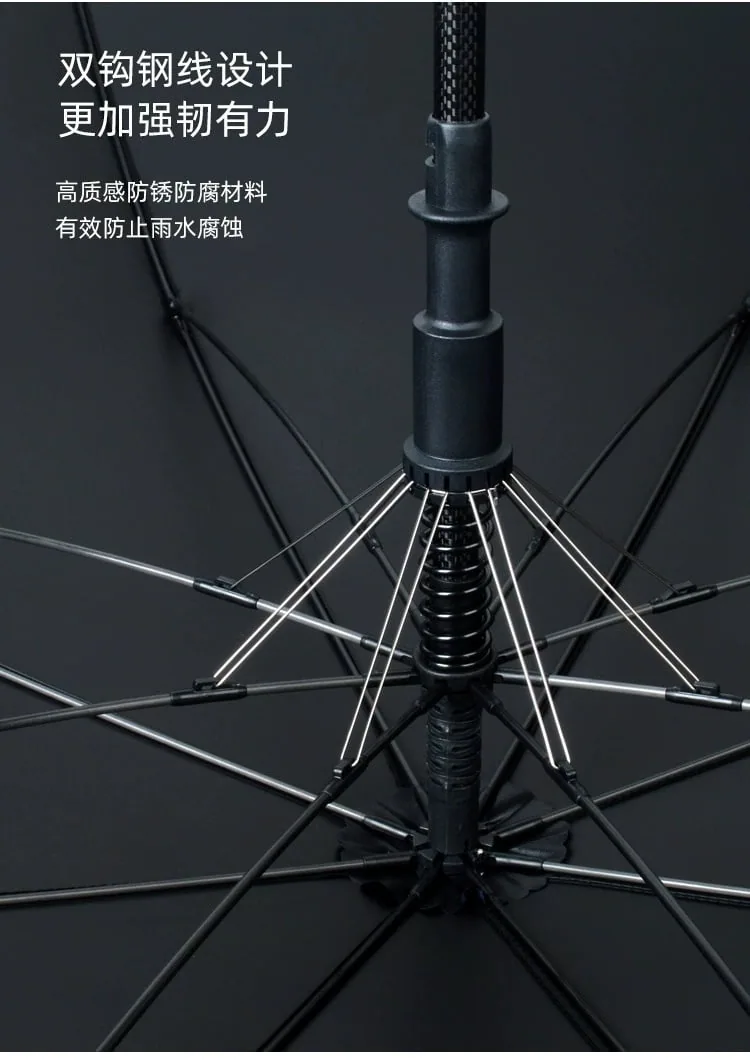
What the supplied umbrella photos add beyond the PDFs
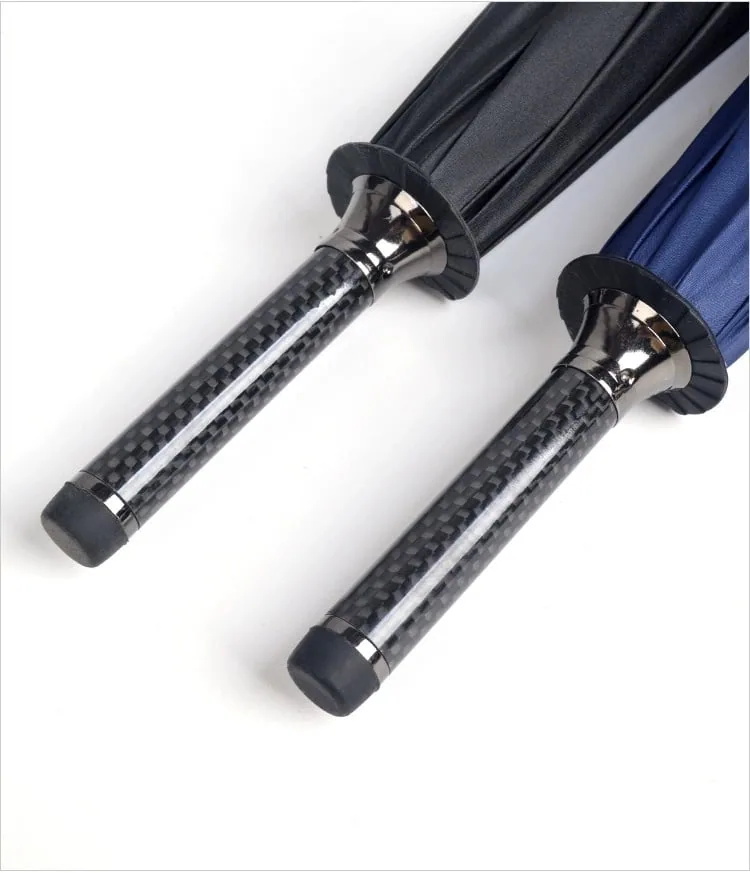
The supplied photos show more than just a carbon-fiber pattern. They show the actual way the premium positioning is being presented in the umbrella design: a carbon fiber handle finish, a carbon fiber shaft look, a double-hook support-wire layout and a black canopy that visually supports a clean technical style. One close-up specifically highlights the support-wire area and calls out anti-rust materials, which matters because a premium shaft alone does not guarantee premium performance if the runner and connecting hardware are weak.
Another supplied image is a weight-positioning visual that shows the umbrella on a scale at about 439.8 g. Because this number comes from a product image annotation rather than from the lab certificates, it should be treated as a product-marketing weight reference, not as a certified laboratory value. Even so, it is still useful in content because it explains the product promise the buyer is evaluating.
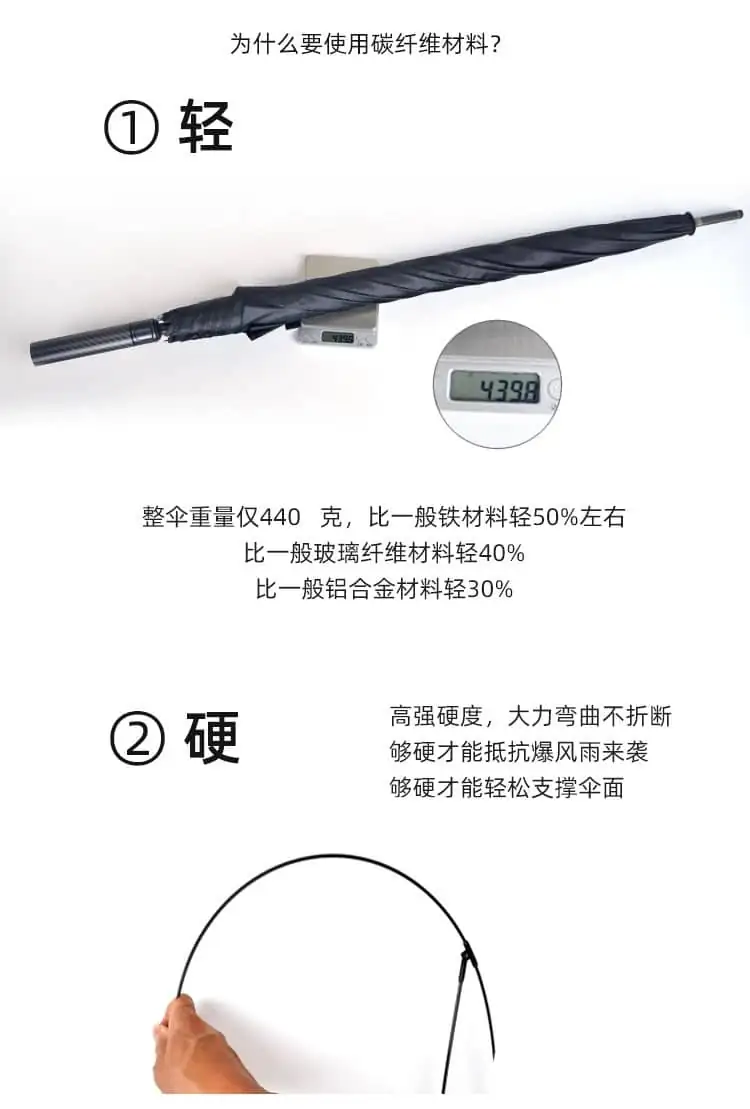
The combination of the weight-positioning image and the carbon-fiber certificates gives a more balanced story: the marketing material positions the product as lightweight, while the certificates document the material composition and density of the carbon-fiber components that support that positioning.
What this means for B2B buyers sourcing a carbon fiber umbrella
A carbon fiber umbrella is usually not the right choice for every mass-promotion project. It fits best where the buyer wants a premium carry feel, lower hand weight, a visible technical material story and a product that stands apart from ordinary metal-frame umbrellas. Typical use cases include executive gifts, premium hotel umbrellas, automotive brand merchandise, club or golf programs and upscale retail collections that need a stronger materials story than a basic folding umbrella can offer.
For a buyer, the key sourcing question is not simply “is it carbon fiber?” It is “which parts are carbon fiber, what test evidence exists for those parts, and how does the full assembly behave in samples?” That is why a strong inquiry should ask for component confirmation, sample photos, opening mechanism details, runner and support-wire photos, coating details and carton packing information in addition to price.
- Ask which parts are carbon fiber: shaft, tube, ribs, handle shell or only decorative surface.
- Match the material story to the sales story: premium executive gift, premium outdoor umbrella or technical lifestyle accessory.
- Request a sample and inspect the runner, support wires, tip finish and open-close feel, not only the shaft pattern.
- Use the test sheets as component evidence, then confirm finished-umbrella performance through samples and pre-shipment checks.
- Keep the marketing claim conservative: lightweight carbon fiber components with supplied material and test evidence is stronger than a vague “strongest umbrella ever” promise.
How carbon fiber compares with common umbrella material choices
Carbon fiber is attractive because it can deliver a premium stiffness-to-weight ratio and a distinctive appearance. Fiberglass remains common because it is practical and cost-effective for many windproof umbrella programs. Metal is still widely used where price sensitivity is higher or where buyers want a different structure and cost balance. In other words, carbon fiber is a premium material choice, not a universal replacement for every umbrella frame.
If you are comparing material directions, review Ark Umbrella’s folding umbrella, straight umbrella, golf umbrella and special umbrella categories. For material and frame evaluation, it is also useful to compare this page with the site’s windproof umbrella frame guide and umbrella quality-control checklist.
What this article does not claim
The supplied PDFs cover component materials and tests. They do not provide a finished-umbrella wind-tunnel certification. Buyers should confirm finished-umbrella performance through samples and any additional testing required for their intended use.
That honesty is also commercially useful. When a buyer sees that the supplier can separate material evidence, product photos and finished-product confirmation steps, the page becomes more credible than a page that simply repeats “lightweight, windproof, premium” without documents or test context.
Sources and buyer references
The links below help buyers verify the external standards, inspection context or trend references behind this sourcing guidance. They do not replace a project-specific quotation, sample approval or written factory confirmation.
- ASTM D3039/D3039M composite tensile test standard – Use this to support why buyers should distinguish material test standards from broad carbon-fiber marketing claims.
- Intertek inspection services – Use this to explain why material certificates and production evidence should be checked against finished-goods inspection records.
Carbon fiber umbrella FAQ
Is a carbon fiber umbrella always stronger than a fiberglass umbrella?
Not automatically. Carbon fiber can offer a strong stiffness-to-weight advantage, but full umbrella performance still depends on how the shaft, ribs, runner, support wires, joints and canopy are engineered together. That is why buyers should review both component data and finished samples.
What test data supports this carbon fiber umbrella page?
This page refers to the supplied tube and rod material certificates dated 18 March 2025 and three component test sheets dated 25 April 2025. The material certificates and test sheets should be reviewed separately, with the relevant component, specimen dimensions and production batch confirmed before use in a purchase specification.
Does the 439.8 g figure come from a lab report?
No. The 439.8 g figure appears in a supplied product image annotation. Confirm the finished sample weight for the ordered model; the component material certificates and test sheets do not certify the complete umbrella weight.
Which buyers are the best fit for a carbon fiber umbrella?
Carbon fiber umbrellas fit premium gifting, executive merchandise, golf and club programs, boutique retail and technical lifestyle projects where lightweight feel and premium material storytelling matter. They are usually less suitable for price-first bulk giveaway programs.
What should a buyer request before placing a carbon fiber umbrella order?
Ask for component confirmation, sample photos, a finished sample, open-close mechanism details, coating details, logo placement options, packaging plan and pre-shipment QC photos. When the project requires a technical performance claim, request the exact test method and scope for the claimed component or full assembly.
For quotation, sampling or private-label development of a premium carbon fiber umbrella, use the Ark Umbrella contact page. If you are building a broader collection, compare this material story with Ark Umbrella’s wholesale umbrella sourcing guide and umbrella parts and specifications guide.
Related factory resource: For premium lightweight umbrella projects, Ark Umbrella’s umbrella manufacturer in China page explains frame options, OEM/ODM sampling, MOQ planning and export support. Buyers can send a sourcing brief or contact Ark Umbrella for technical review.