
If you’re sourcing umbrellas for your retail brand, corporate giveaway, or import business, chances are you’ve already discovered that China dominates global umbrella production. But with thousands of factories scattered across multiple provinces, finding one that actually delivers on quality, pricing, and communication can feel overwhelming.
This guide breaks down the 7 critical factors experienced importers use to evaluate Chinese umbrella manufacturers — so you don’t have to learn the hard way.
Why China Remains the Go-To for Umbrella Manufacturing
When sourcing from China, map the actual supply chain for your order: fabric mills, frame suppliers, printing, assembly, packaging and logistics. Ask which operations the quoted factory performs itself and which it subcontracts; location alone does not establish capability.
Three regions dominate umbrella production:
- Fujian Province (Jinjiang, Dongshi) — Strong in both fabric and POE/EVA transparent umbrellas. Many factories here have deep roots in OEM work for global brands.
- Zhejiang Province (Shangyu) — Known for large-scale folding umbrella production.
- Guangdong Province (Shenzhen, Dongguan) — A hub for higher-end, design-focused umbrella brands.
Compare regional suppliers against the same specification, sample requirements and delivery plan. Proximity to suppliers can help coordination, but does not guarantee price, quality or delivery.
7 Key Factors to Evaluate an Umbrella Manufacturer
1. Production Capacity and Factory Scale
A factory’s output tells you whether they can handle your order — both now and as your business grows.
What to ask:
- Annual production volume — Ask for recent output for comparable models and the capacity available during your production window; annual totals alone do not establish order capacity.
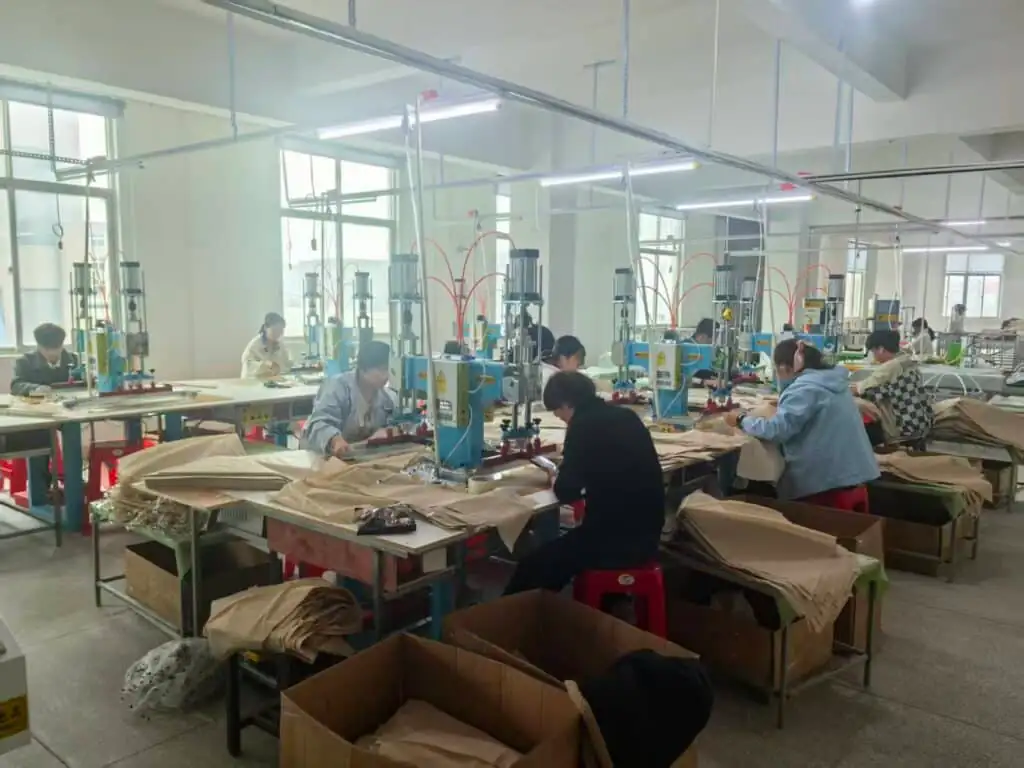
- Number of production lines — Confirm which lines can make your model, their current bookings and any shared bottlenecks in printing, sewing or assembly.
- Workforce size — Ask how the relevant operations are staffed and supervised; headcount alone does not prove consistent output.
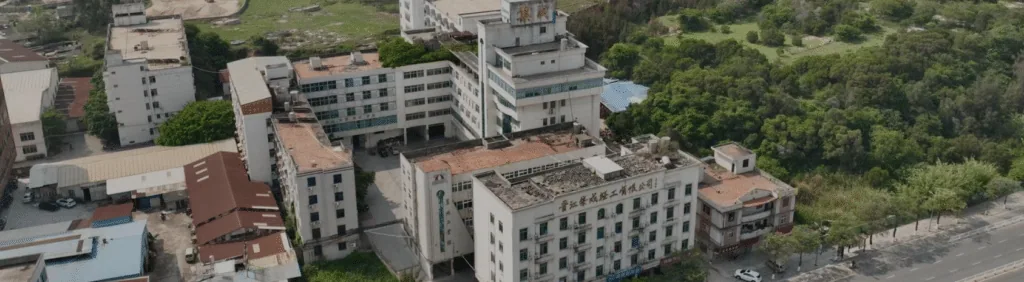
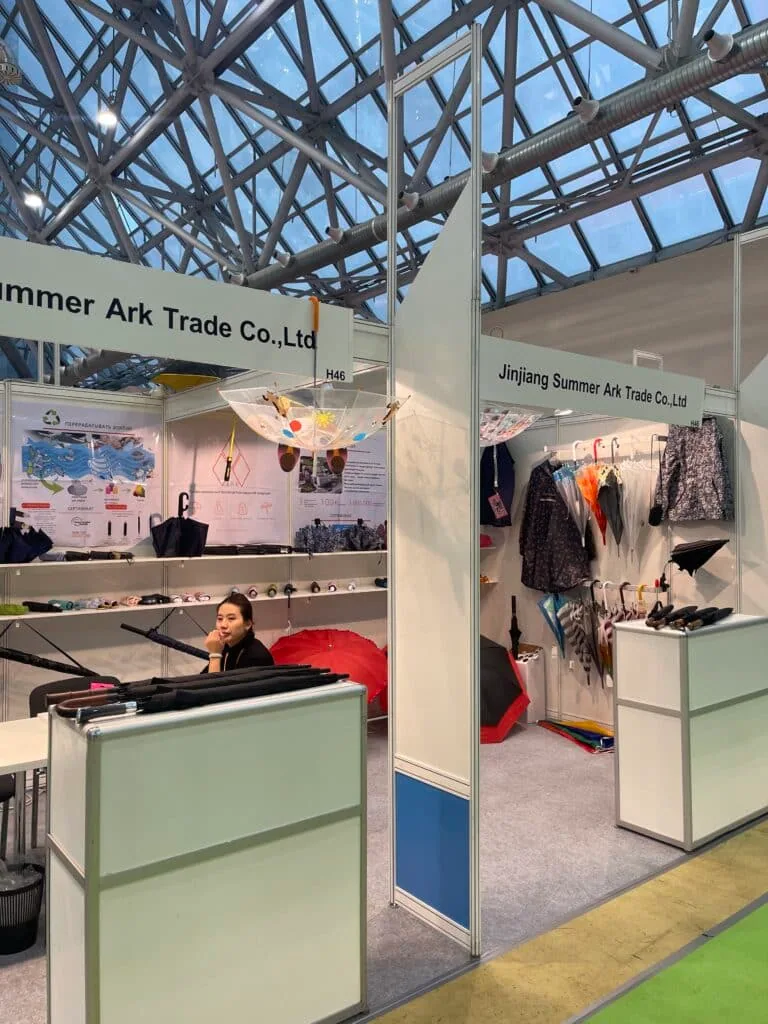
For reference, a factory like Ark Umbrella in Jinjiang operates 3 dedicated production lines (2 for fabric umbrellas, 1 for POE umbrellas) with over 100 workers, pushing annual output past 3 million pieces. These company-reported figures are background information; confirm available capacity and the delivery schedule for your specific order.
2. Product Range and Customization Capability
Not every factory makes every type of umbrella. Some specialize in folding umbrellas only, while others cover the full spectrum.
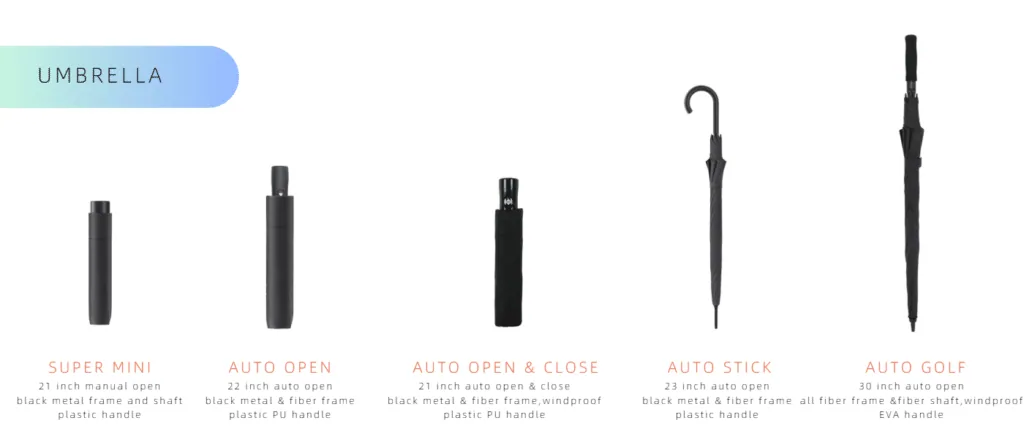
Check whether the factory produces the specific categories you need:
- Folding umbrellas (2-fold, 3-fold, 5-fold, automatic)
- Straight/walking umbrellas
- Golf umbrellas
- POE/EVA transparent umbrellas
- Kids’ umbrellas
- Beach and patio umbrellas
Equally important: can they do custom work? Most B2B buyers need logo printing, custom fabric patterns, Pantone color matching, or custom packaging. Ask for photos of past custom projects — a factory that’s done serious OEM/ODM work will have plenty to show.
3. Quality Certifications and Audit Reports
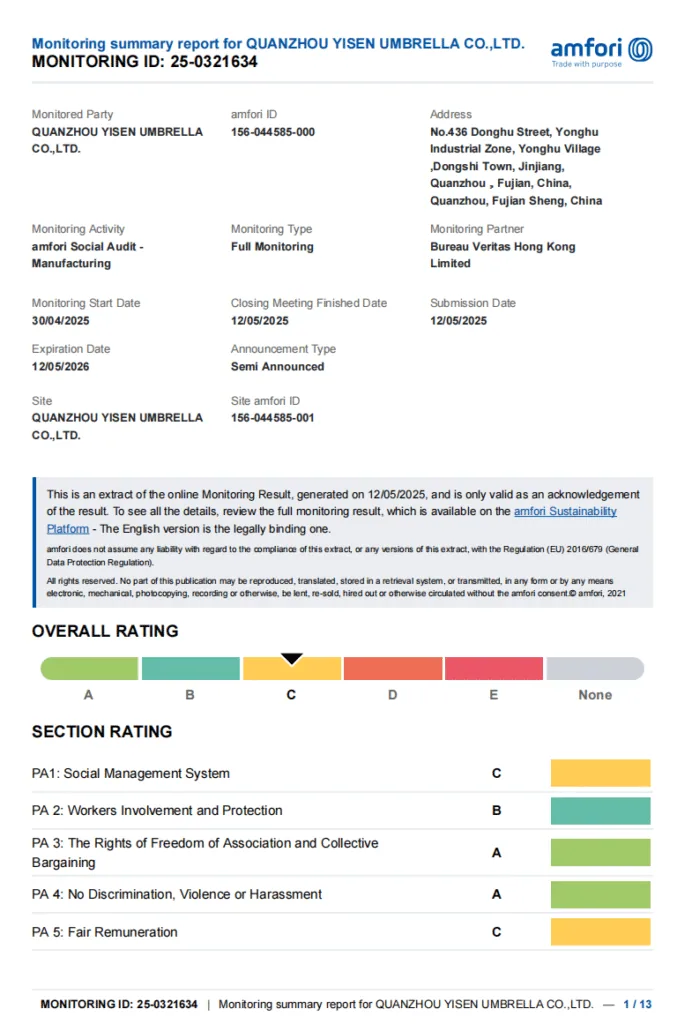
Distinguish management-system certificates, social audit reports, production authorizations and product test reports. Check the named entity, facility, scope, date and issuing body against the actual order.
Evidence to review for the relevant buyer and product requirements:
| Document or assessment | What It Means |
|---|---|
| BSCI | amfori BSCI social audit information on workplace conditions; review the facility, audit date, findings and corrective actions. |
| ISO 9001 | Quality management system standard; check the certified entity and scope if certification is claimed. |
| Disney FAMA | Disney-issued Facility and Merchandise Authorization for specified production arrangements; check the facility, licensee/vendor and current authorization. It is not a general product-quality certification. |
| SGS/Intertek reports | Reports issued for specific tests or inspections; check the sample, method, date and results against your ordered product. |
Review the complete social compliance audit report, including findings and corrective actions. A report for another customer does not establish that your product, subcontractors or current production conditions are covered.
4. MOQ and Pricing Structure
Minimum Order Quantities vary widely across Chinese umbrella factories:
- Material minimums: Ask about minimum fabric, component and production-run quantities for your specification.
- Stock-material options: Ask whether stock materials can support a smaller first order and how that affects unit cost.
- Model, colour and artwork minimums: Confirm MOQ per model, colour and artwork; factory size does not determine a universal minimum.
Pricing depends on several variables: frame material (fiberglass ribs cost more than steel), fabric type (pongee vs polyester vs POE), printing method (screen print vs heat transfer vs digital), and of course, order volume.
Pro tip: Compare itemised quotes against the same materials, dimensions, printing, packaging, tests and shipping terms. Investigate exclusions or specification differences before judging an unusually low price.
5. Sample Policy and Lead Time
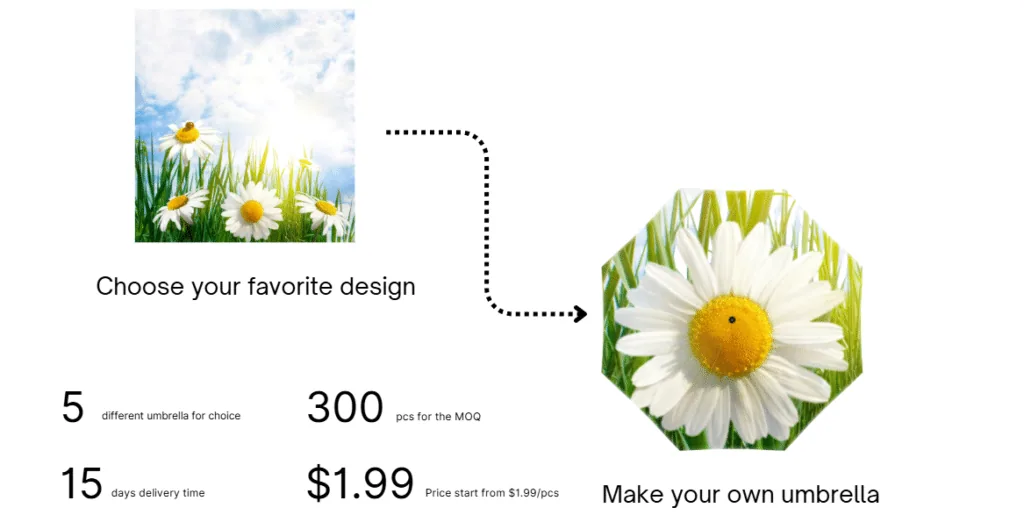
Before committing to a bulk order, always request samples. Here’s what to expect:
- Sample cost: Request a written quote covering development, printing, tooling and shipping; agree whether any fee is credited against a bulk order.
- Sample lead time: Confirm the sample schedule after artwork, materials and payment arrangements are agreed; allow time for revisions.
- Bulk production lead time: Obtain an order-specific schedule covering material availability, sample approval, production, inspection and dispatch; plan freight and customs separately.
Resolve sample access, approval criteria and payment exposure before committing to production. If the supplier cannot provide adequate evidence or workable terms, compare another supplier.
6. Communication and Responsiveness
This is where many good factories lose buyers. Technical capability means nothing if you can’t get a reply to your email within 48 hours.
Evaluate:
- Response speed — Do they reply within 24 hours on working days?
- English proficiency — Can the sales team explain technical details clearly?
- Problem-solving attitude — When you raise a concern, do they offer solutions or excuses?
- Proactive updates — Do they send production progress photos without being asked?
Good communication is especially critical for custom orders, where misunderstandings about colors, dimensions, or printing positions can derail an entire shipment.
7. Export Experience and Logistics Support
A factory with strong export experience will save you headaches at the finish line.
Questions to ask:
- Which countries do you regularly export to?
- Can you handle FOB and CIF terms?
- What’s your standard export packaging? (Inner polybag + outer carton is standard; ask about carton dimensions and packing quantity)
- Do you have experience with customs documentation for your target market?
- Can you arrange container loading and coordinate with freight forwarders?
Factories located in Fujian (near Xiamen port) or Guangdong (near Shenzhen/Guangzhou ports) have natural logistics advantages for ocean freight.
Red Flags to Watch Out For
In over a decade of working in umbrella manufacturing, certain warning signs consistently predict trouble:
🚩 No factory photos or video — If they can only show you product shots from catalogs, they may be a trading company reselling someone else’s products.
🚩 Unrealistically low prices — Check whether the quote covers the agreed specification, quantity, packaging, tests and shipping terms. A headline price alone cannot establish feasibility or quality.
🚩 100% payment before production — Assess the amount at risk, supplier verification and agreed delivery milestones. Negotiate written payment terms; no single deposit ratio applies to every order.
🚩 Unverified business identity — Verify the contracting business, production site, payment beneficiary and export arrangements. Business registration and product certification serve different purposes.
🚩 Reluctance to provide references — Request references with customer consent or other verifiable project evidence. Customer confidentiality can limit disclosure, so assess the evidence as a whole.
How to Place Your First Order: Step by Step
Step 1: Define your requirements. Be specific: umbrella type, size, frame material, fabric, color, quantity, logo printing, and target delivery date.
Step 2: Contact 3–5 factories. Send the same spec sheet to each one for apples-to-apples quotes. Pay attention to how quickly and thoroughly they respond.
Step 3: Request and compare samples. Compare materials, dimensions, stitching, printing and mechanism operation against the agreed specification. Agree appropriate test methods, cycle counts and acceptance criteria; informal handling is not a certified durability test.
Step 4: Negotiate terms and sign a PI. Confirm the specification, price, payment milestones, delivery schedule, inspection plan and defect-resolution terms in the written order documents.
Step 5: Arrange third-party inspection. Decide inspection scope from order risk and buyer requirements, not a fixed order-value threshold. Obtain a current quote specifying location, inspector time, sample plan, checks and reporting.
Step 6: Coordinate shipping. Your factory can usually recommend freight forwarders, or you can use your own. Confirm Incoterms (FOB, CIF, etc.) and make sure all export documents are in order.
Sources and buyer references
The links below help buyers verify the external standards, inspection context or trend references behind this sourcing guidance. They do not replace a project-specific quotation, sample approval or written factory confirmation.
- ISO 2859-1:2026 sampling procedures – Use this to connect buyer checklists with AQL sampling and lot-by-lot inspection planning.
- Intertek inspection services – Use this to frame QC evidence, product checks and shipment inspection as verifiable buyer controls.
Frequently Asked Questions
What is the typical MOQ for custom umbrellas from China? Request MOQ per model, colour and artwork. Stock materials and repeat specifications may change the minimum; confirm it in the quotation for your order.
How long does umbrella production take? Confirm sample, production and dispatch dates for the selected specification and quantity. Include approval, material sourcing and inspection milestones, then allow separately for freight and customs.
Can I visit the factory before ordering? Absolutely. Reputable factories welcome visits. If you’re attending trade shows like the Canton Fair or Hong Kong Mega Show, many Fujian-based factories are just a short flight from those venues.
What payment methods do Chinese factories accept? Ask the supplier which methods it accepts for your order and verify the beneficiary. Agree the deposit, balance milestones, fees and documentary requirements in writing.
How do I handle quality problems after delivery? Record the affected models, quantities, lot details, photos and videos, and notify the supplier within the agreed claim period. Apply the written inspection and defect-resolution terms; agree any replacement, credit or refund rather than assuming a particular remedy.
Ready to Start Sourcing?
Choosing the right umbrella manufacturer comes down to doing your homework upfront. Verify capacity, check certifications, test samples, and build a relationship before committing to large volumes.
If you’re looking for a manufacturer with 16 years of production experience, flexible MOQs, and a proven track record with global brands, get in touch with our team — we’re always happy to discuss your project and provide samples.
📧 Email: [email protected] 📱 WhatsApp: +86 18850515610
Related Manufacturer Selection Resources
When choosing an umbrella manufacturer in China, buyers should connect supplier screening with practical order planning. Review the umbrella factory information guide, umbrella quality control checklist, custom umbrella quotation package guide, umbrella parts and specifications guide and custom umbrella sourcing FAQ before confirming samples or bulk production.
Related sourcing resource: For buyers narrowing supplier options, Ark Umbrella’s China umbrella factory and manufacturer guide gives a clearer view of OEM/ODM capability, MOQ planning, quality control and export support. For active sourcing projects, send a sourcing brief or contact Ark Umbrella for a factory review.