
No material combination is automatically the most environmentally preferable umbrella. Specify the canopy, frame, handle and packaging separately, then document the particular claim being made. RPET content, a bamboo or wooden handle, and reduced packaging can be options to assess; their names alone do not establish lower whole-product impact.
Umbrellas are multi-material products: canopy fabric, ribs, shaft, tips, runner, handle, strap, sleeve and packaging all contribute to the finished product. This guide explains material options and the evidence buyers should request before using environmental claims on wholesale umbrella orders.
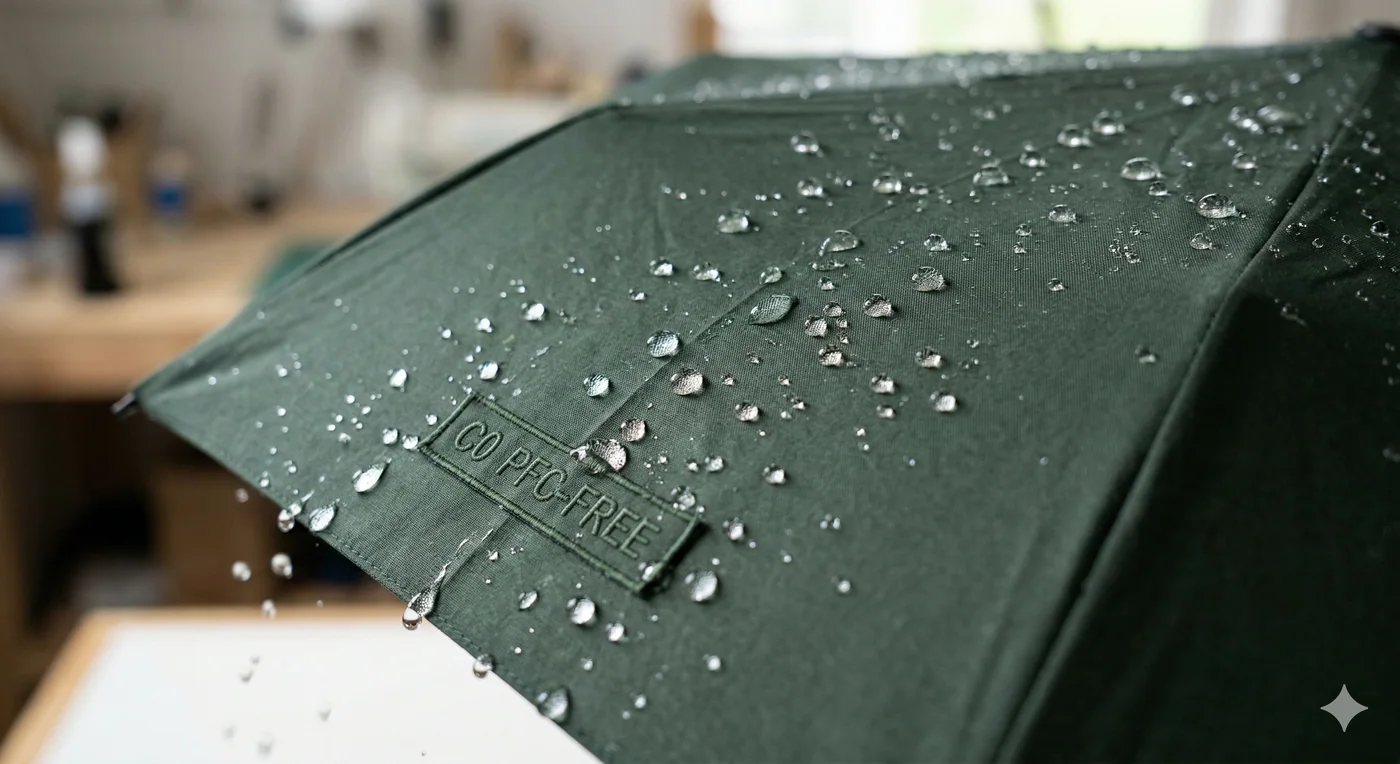
What Makes an Umbrella Eco-Friendly?
State the exact environmental attribute, the component it covers and the comparison basis. A verified recycled-content percentage is a material-content claim; it does not by itself demonstrate lower carbon emissions, recyclability or lower environmental impact for the entire umbrella. Broader comparisons need evidence appropriate to their scope.
Include durability, repair options and expected use in the evaluation, alongside material sourcing and packaging. Test the specified complete model under agreed conditions. Neither a recycled canopy nor a particular frame material proves the finished umbrella will last longer.
RPET Fabric for Umbrella Canopies
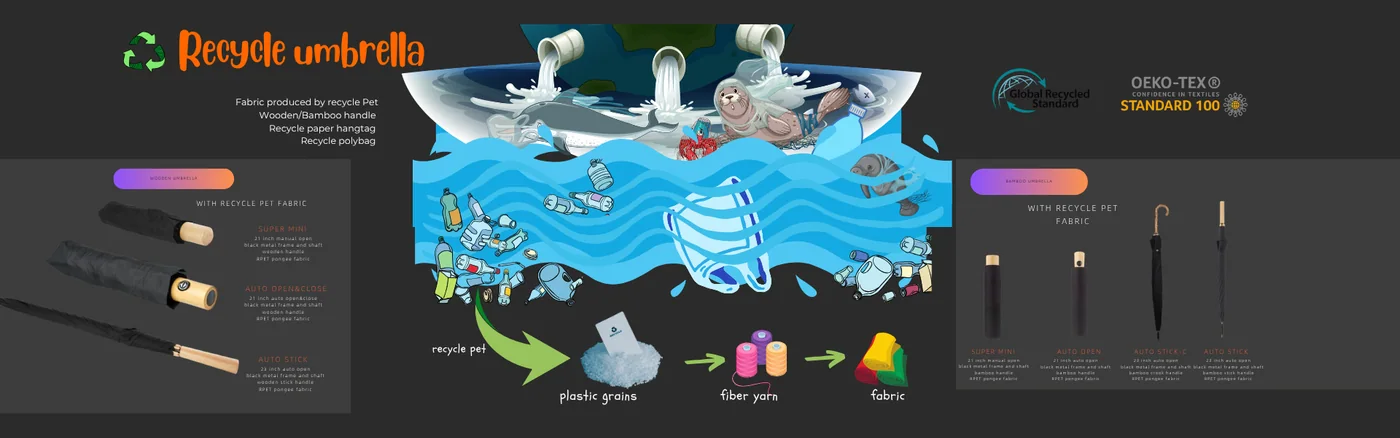
RPET means recycled polyethylene terephthalate. Confirm the source type and recycled proportion in the selected canopy fabric rather than assuming all RPET is entirely made from post-consumer bottles. Check the actual fabric construction, finish, printing compatibility and performance separately.
Buyers who want RPET umbrellas should confirm whether the recycled content is traceable and whether the supplier can provide supporting documents. If the order is for a sustainability campaign, retail packaging claim or corporate ESG gift, documentation matters as much as the material itself.
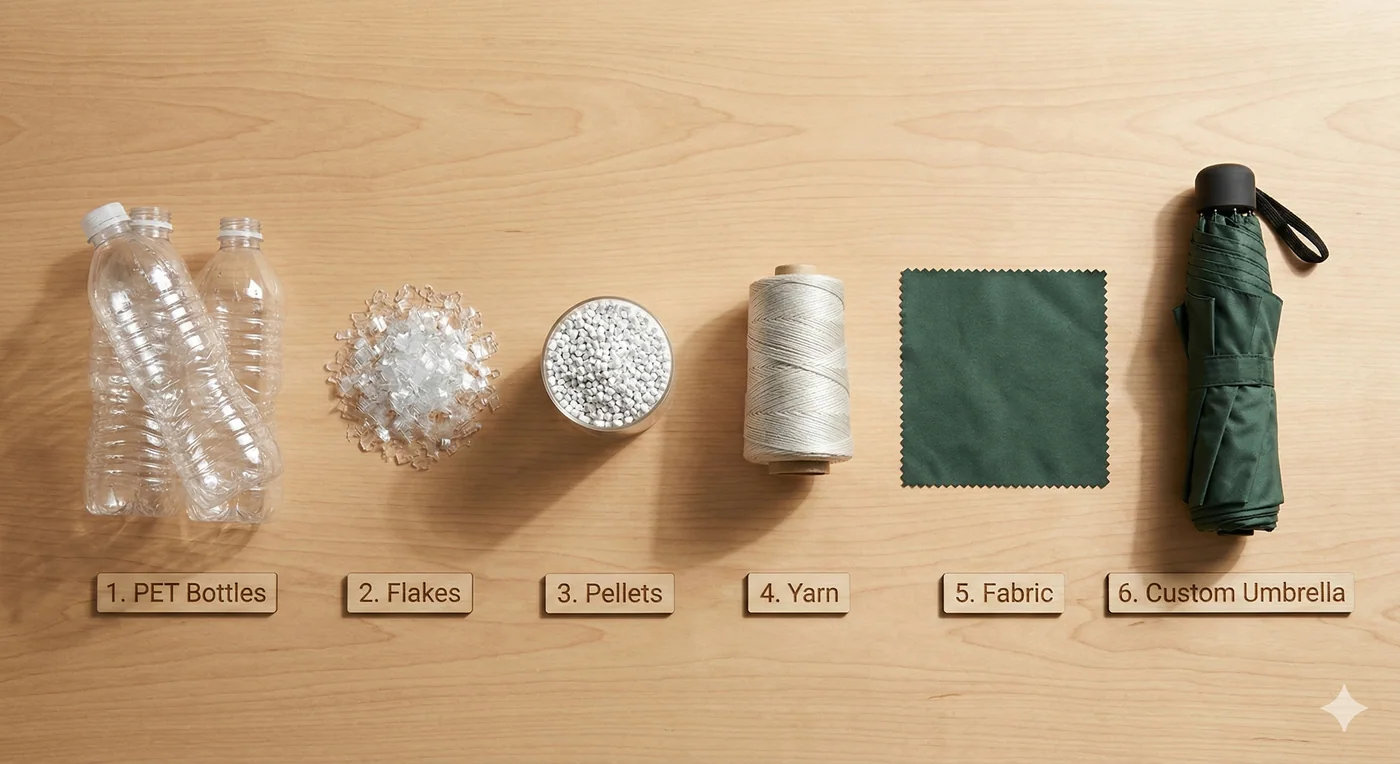
Benefits of RPET Umbrellas for B2B Buyers
- Specific material communication: state the verified recycled proportion and the component it applies to.
- Good print compatibility: RPET polyester can support logo printing, panel printing and full-panel artwork depending on fabric and ink selection.
- Scalable production: RPET canopy fabric is suitable for folding umbrellas, straight umbrellas, golf umbrellas and promotional umbrellas.
- Material comparison: evaluate the proposed recycled and virgin polyester fabrics against the same color, construction and performance requirements.
For more detailed background on recycled umbrella fabric, buyers can also read Ark Umbrella’s guide to RPET umbrella fabric for wholesale buyers and the earlier RPET umbrella sustainable sourcing guide.
Bamboo Handles for Eco-Friendly Umbrellas
Bamboo handles offer a natural surface appearance. Confirm whether the supplied handle is solid bamboo, laminated material or another construction, and document its source, finish and assembly. Appearance alone does not substantiate lower environmental impact for the handle or the complete umbrella.
When sourcing bamboo handle umbrellas, buyers should check handle shape consistency, surface finishing, moisture control, color variation and assembly strength. Bamboo is a natural material, so slight texture differences are normal, but the final shipment should still follow approved samples.
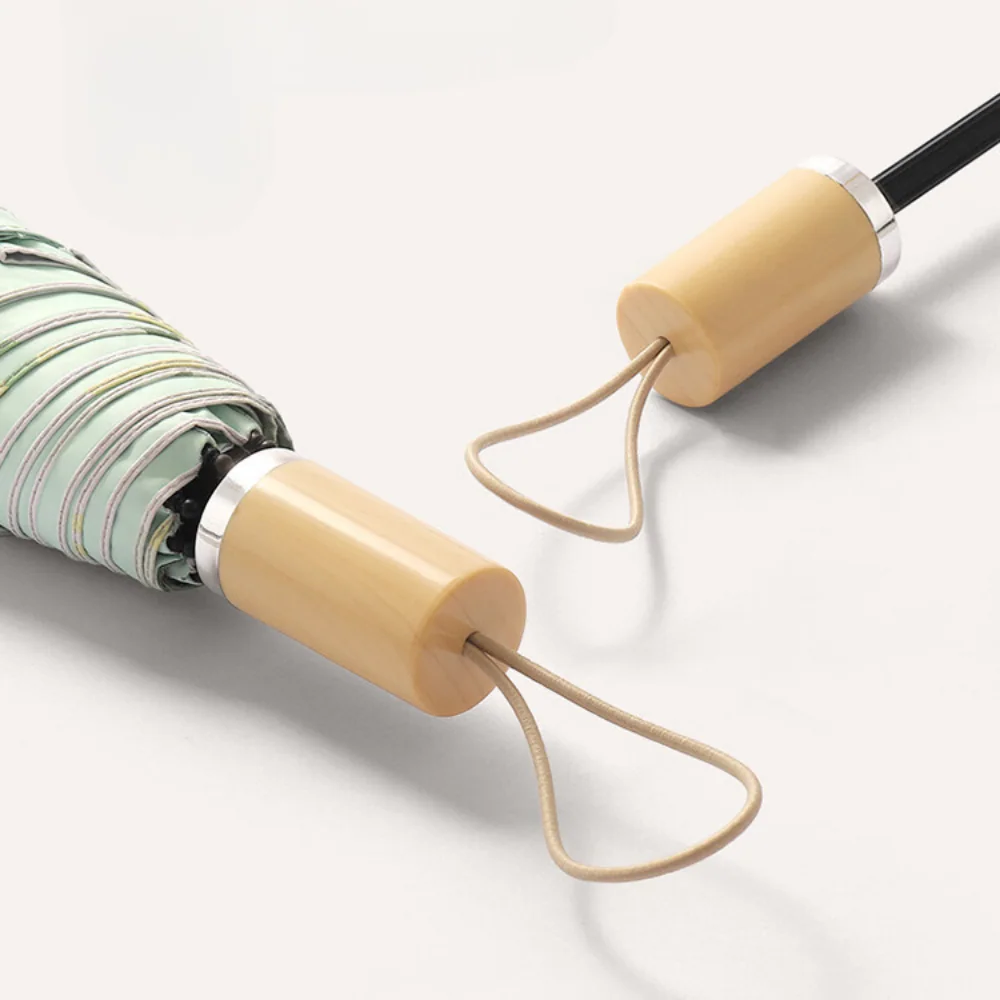
Wooden Handles and Natural Material Positioning
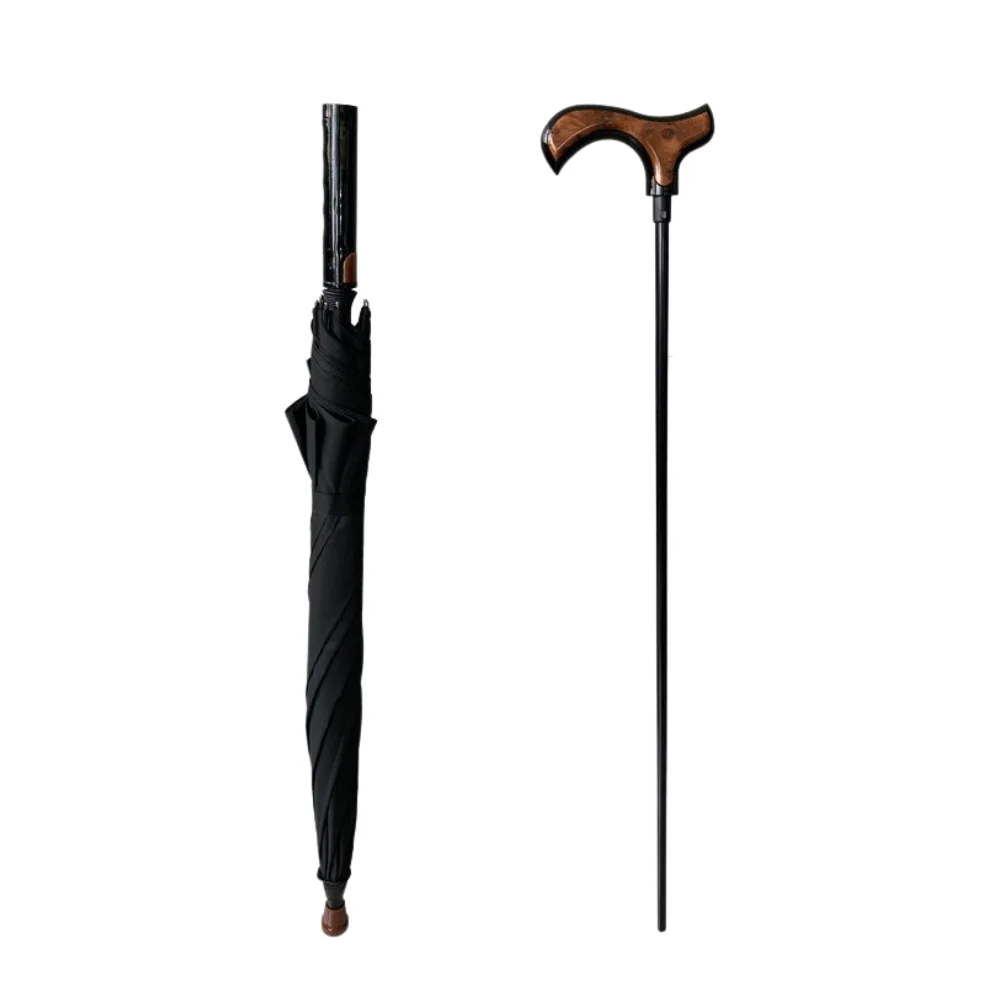
Wooden handles are a design option for a natural appearance. Specify the actual material, source, finish and attachment, then evaluate the sample for the intended use. A wooden appearance or a premium price does not prove greater durability or lower environmental impact.
The key purchasing point is not only whether the handle is wood, but whether the finish is smooth, the color is consistent, the handle is firmly attached and the coating can resist daily use. Buyers should also ask whether the wood source, finish and packaging claims match the target market’s compliance expectations.
Recyclable and Reduced-Plastic Components
Assess end-of-life options component by component. A recyclable material does not make a multi-material umbrella recyclable as a whole. Confirm whether the parts can be separated and whether the intended market has a suitable collection and processing route before making a recycling claim.
Paper bands, recycled paper tags, fewer polybags and fabric sleeves are packaging options to evaluate. Compare the actual material quantities, shipping protection, reuse requirements and available disposal routes. A kraft appearance or a reusable label alone does not establish lower environmental impact.
Eco-Friendly Umbrella Material Comparison
| Material option | Main benefit | Best for | Buyer checks |
|---|---|---|---|
| RPET canopy fabric | Can replace a documented proportion of virgin polyester in the specified canopy fabric | Corporate gifts, retail, promotional umbrellas, ESG programs | Recycled content documents, color consistency, waterproof finish, print quality |
| Bamboo handle | Natural renewable appearance | Lifestyle brands, resorts, eco campaigns, boutique retail | Moisture control, surface finish, handle shape, assembly strength |
| Wooden handle | Premium natural feel and lower-plastic look | Hospitality, classic straight umbrellas, premium gifts | Finish quality, color tolerance, handle attachment, sourcing claims |
| Recyclable packaging | Evaluate material reduction and recycling routes against a defined packaging baseline | Retail programs, corporate gifting, online sales | Carton strength, hang tag material, sleeve choice, shipping protection |
| Durable frame components | Verify service-life claims with relevant model-specific evidence | Windy markets, outdoor use, long-term brand gifts | Rib material, shaft strength, open-close testing, QC standards |
Do Eco-Friendly Umbrellas Cost More?
Eco-friendly umbrellas can cost more than standard promotional umbrellas, especially when buyers request certified recycled materials, special packaging or natural handle components. The final cost depends on fabric type, recycled content, frame structure, handle material, order quantity, logo printing method and testing requirements.
For cost-sensitive programs, buyers can start with RPET canopy fabric and simple recyclable packaging. For premium retail or corporate ESG gifts, buyers may combine RPET fabric with a wood or bamboo handle, custom sleeve and more detailed sustainability labeling.
Certificates and Claims Buyers Should Check
Use specific claims that identify the component, material proportion and supporting evidence. Check certificate holder, scope, validity and order-linked documentation where certification is claimed. A supplier or fabric certificate does not automatically certify the finished umbrella, and it does not authorize every environmental statement or label.
For recycled textile claims, many buyers refer to standards such as Global Recycled Standard information from Textile Exchange. For chemical and textile safety communication, buyers may also review OEKO-TEX Standard 100. If wood sourcing is part of the product claim, buyers can check requirements from organizations such as FSC.
Printing and Branding on Sustainable Umbrellas
Eco-friendly umbrellas can still support strong branding. Buyers can print logos on RPET canopy panels, sleeves, hang tags or packaging. However, they should confirm printing compatibility with the selected fabric finish. Water repellent coatings, darker canopy colors and special textures may affect logo sharpness or ink adhesion.
For logo planning, buyers can review Ark Umbrella’s guide to custom logo placement ideas for promotional umbrellas and the broader custom umbrellas with logo manufacturer guide.
Quality Control for Eco-Friendly Umbrella Orders
Eco-friendly materials do not remove the need for standard umbrella inspection. Buyers should check canopy cutting, stitching, water repellency, frame strength, open-close function, handle assembly, logo printing, carton marks and packaging consistency. Sustainability claims may attract customers, but quality determines whether the product supports repeat orders.
Before shipment, buyers can use Ark Umbrella’s umbrella quality control checklist for B2B buyers to align inspection standards with suppliers.
Recommended Specifications for B2B Eco-Friendly Umbrellas
| Canopy | RPET pongee, RPET polyester or recycled polyester fabric |
| Frame | Evaluate recovery and durability on the specified complete model. |
| Handle | Bamboo, wood, recycled plastic or lower-plastic custom option |
| Printing | Panel logo, sleeve logo, hang tag branding or full-panel artwork |
| Packaging | Reusable sleeve, recycled paper tag, kraft carton or reduced polybag plan |
| Documents | Component specifications, verified content and sourcing records, applicable certificates and claim-matched test evidence |
Factory Notes from Ark Umbrella
From a manufacturer perspective, the best eco-friendly umbrella projects start with a clear target: retail sustainability story, corporate ESG gift, hospitality program, school promotion or outdoor brand product. Once the target is clear, the factory can recommend the right balance of RPET fabric, handle material, frame structure, printing method and packaging plan.
Buyers should not only ask for the lowest eco-friendly price. They should ask which material claims can be supported, which components are realistic for the budget, and which design choices will keep the umbrella durable enough for real use.
Buyer Checklist Before Ordering Eco-Friendly Umbrellas
- Confirm whether the canopy fabric is RPET, regular polyester or another material.
- Ask what recycled content documents or declarations are available.
- Check whether bamboo or wooden handles match the approved sample.
- Confirm printing compatibility before mass production.
- Review packaging and reduce unnecessary plastic where possible.
- Request pre-production samples for color, handle finish and logo approval.
- Use shipment inspection to verify quality and sustainability-related claims.
Related sourcing resource: If you are comparing eco materials with real production requirements, Ark Umbrella’s umbrella manufacturer in China guide explains OEM/ODM capability, MOQ planning, sample coordination and export support. For active sustainable programs, send a sourcing brief or contact Ark Umbrella for a project review.
Related carbon fiber umbrella guide
The related carbon fiber umbrella guide discusses technical-material options and reported test data. Evaluate the scope and model match of each supporting document; technical performance and environmental impact are separate claims. carbon fiber umbrella guide with test data and material certificates
FAQ
Are RPET umbrellas really eco-friendly?
RPET describes recycled PET content, not an automatic whole-product environmental advantage. Confirm the recycled proportion, component and order-linked evidence. Claims about lower emissions or overall impact require a defined comparison and evidence covering that claim.
Is bamboo better than plastic for umbrella handles?
Bamboo and plastic handles should be compared for the specified construction, sourcing, finish, durability and end-of-life route. Bamboo appearance alone does not prove a lower environmental impact. Check sample quality and require evidence for any comparative claim.
Can eco-friendly umbrellas still be custom printed?
Yes. RPET umbrellas can usually support logo printing, panel printing, sleeve branding and hang tag branding. Buyers should confirm fabric coating and ink compatibility before mass production.
What is the best eco-friendly umbrella option for corporate gifts?
Start with the intended use and the specific material or packaging goal. Compare documented canopy options, complete-model durability, printing and packaging requirements. Select bamboo, wood or another handle based on the specification and evidence rather than treating one combination as the best environmental choice.
Can Ark Umbrella manufacture eco-friendly custom umbrellas?
Yes. Ark Umbrella can support custom umbrella projects using RPET fabric, bamboo or wooden handle options, custom logo printing and buyer-specific packaging requirements for wholesale and OEM orders.
Buyer Summary
For each umbrella component, record the selected material, verified content or sourcing claim, and supporting documents. Assess complete-model durability and packaging separately. Keep labels consistent with the order evidence, and do not infer a whole-product environmental advantage from one recycled or natural-looking component.